

Purslane, a superfood packed with nutrients
Purslane is a tasty succulent abundant with nutrients, giving it a multitude of health benefits. It is an amazing heart healthy and brain nourishing superfood everyone should include in their farmacy. This superfood is rich in the essential Omega-3 fatty acid, alpha-linolenic acid; minerals: zinc, iron, potassium, manganese, copper, magnesium, & calcium; and Vitamins: A, B1, B2, B3, B6, C, & E. The pigments: betalain alkaloid pigments in the reddish stem, betacyanin pigments in the yellow flower petals, and betaxanthin in the leaves, all provide powerful antioxidant and antimutagenic effects. Rich in fiber, it is one of the vegetables with the lowest calories at 16kcal/100g.
Purslane’s Omegas Nourish the Endocannabinoid System
Purslane is an amazing superfood because it contains so many beneficial nutrients for us in much higher levels relative to most other plants. Vegans and vegetarians looking for Omega-3 fatty acids have the richest plant-based source of omega-3’s in Purslane!!!
Omegas are essential fatty acids and building blocks our bodies require to synthesize endocannabinoids like anandamide. We must consume Omega 3’s & 6’s when we eat food because our cells do not synthesize them. For this reason, Omegas can help to balance the ECS.
Omega 3 is “heart healthy” because from the liver, the ECS regulates LDL cholesterol breakdown in the gall bladder. Likewise, Omega 3 is a superfood for our brains, because the ECS in our brains uses anandamide for many cellular functions.
Vitamin E and Beta Carotene are at six times the level in spinach or carrots. High potassium levels are important for metabolism, stabilizing blood sugar levels, and maintaining a healthy circulatory system. Pectin lowers cholesterol and glucose absorption.
How to Grow Purslane
I grow purslane as a companion plant throughout my garden. The plant flourishes in the nutrient rich soil. All plants living together with purslane thrive. It is a great ground cover, and it provides habitat and resources for birds.
I grow purslane as a companion plant because it has so much to share through root exudate, including Omegas. It reseeds itself yearly, so I never have to plant it.
How to Eat Purslane
Purslane is tasty, somewhat crunchy, a little citrusy, and slightly peppery. Some people compare it to watercress or spinach. Many cultures around the world incorporate purslane into their cooking: raw in salads, baked like spinach in pastries, fried stems with feta, stewed in soups, pickled, and super juicing. Pectin provides a natural thickening ability for smoothies, soups, and stews.
I love to eat it raw in salads, especially in potato salad. It is a delightful addition to a lemon caper sauce for fish or chicken piccata. They are also a tasty snack pickled. Overall, I am still learning how to eat purslane, and will continue to explore new recipes. Please comment how you like to consume the amazing Purslane!!
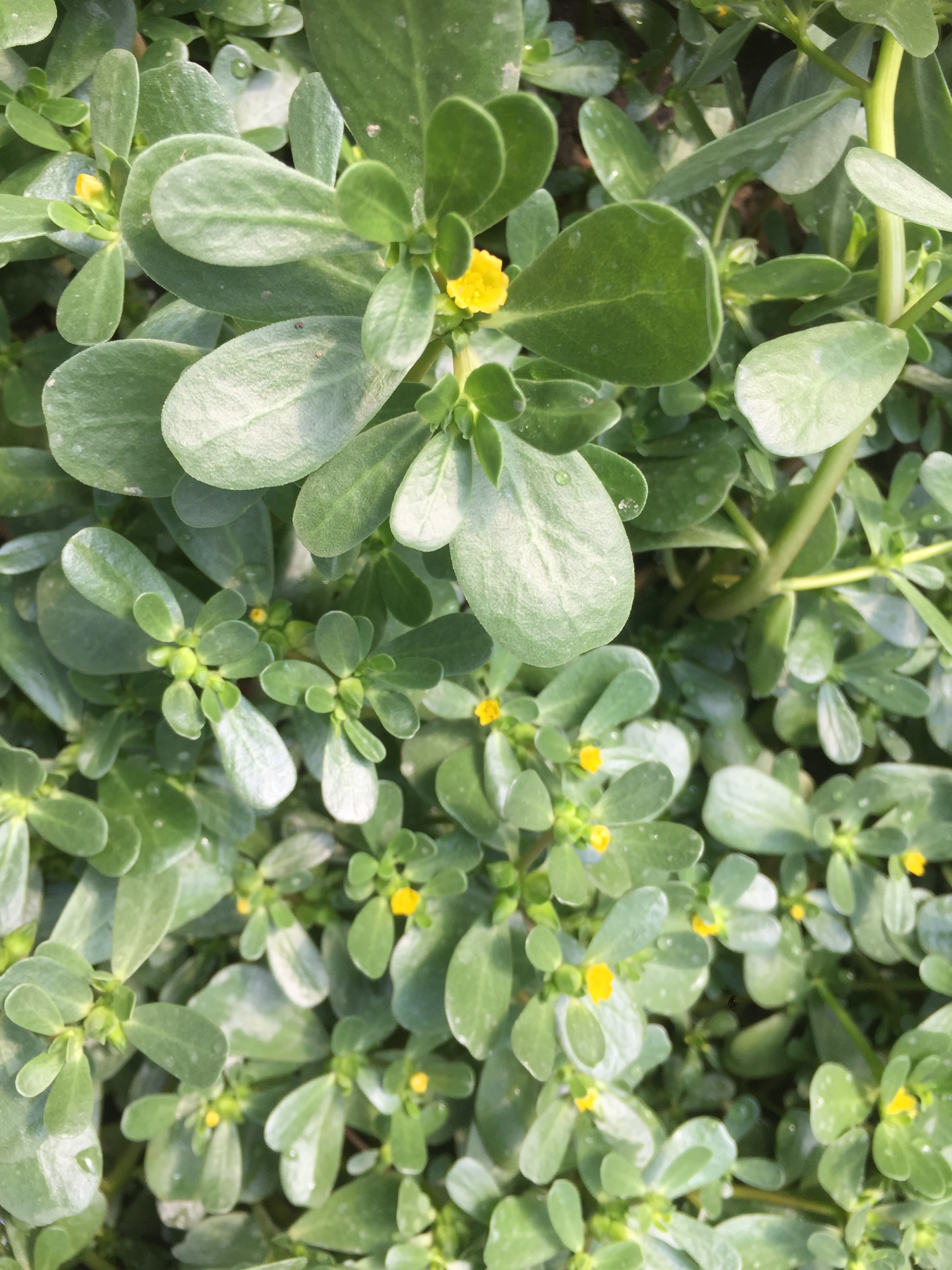
Purslane, Portulaca oleracea, all parts of the plant: roots, stems, leaves, flowers, and seeds are full with nutrients and considered to be superfood.


Oh great, I can eat these weeds that are taking over my garden instead of pulling and composting them? Awesome! I’m gonna juice about ten pound of this stuff and freeze what I don’t drink. Should taste nice with some apples squeezed in… 😉
https://www.thespruceeats.com/pickled-purslane-recipe-1327781 I found this straightforward recipe for pickled purslane. Lots of recipes online but I looked for one I have experience doing similar hot pickled veggies.
I’ll have to try it! Thanks for the share 🙂